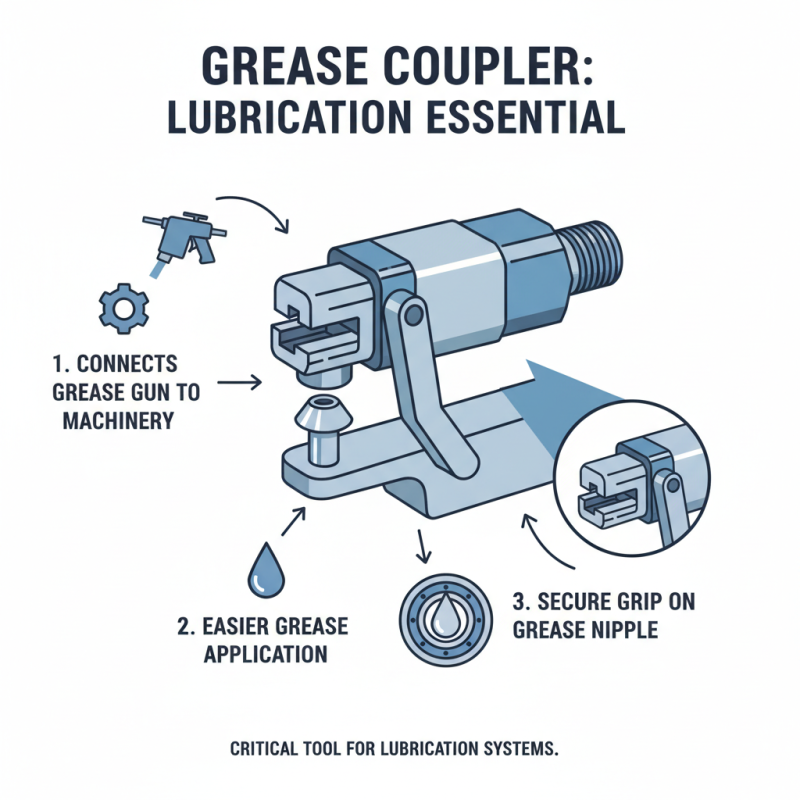
A grease coupler plays a vital role in lubrication systems. It connects the grease gun to various machinery components. Understanding how a grease coupler functions can enhance maintenance and efficiency.
Grease couplers are designed to deliver grease precisely where it's needed. They allow for easy attachment and detachment. Many users struggle with proper fitting, leading to grease leakage or inefficient application. The right grease coupler can prevent these common issues.
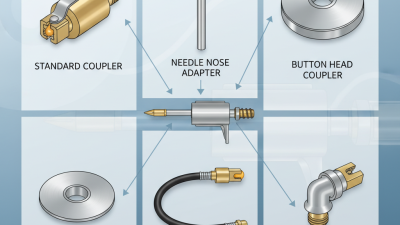
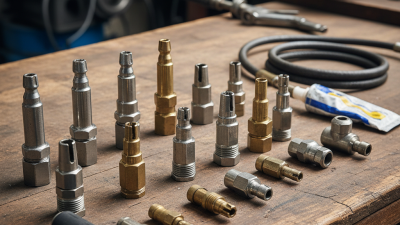
Grease couplers come in various shapes and sizes. Some are automatic, while others require manual operation. Choosing the right type is crucial for effective lubrication. Be cautious when selecting a grease coupler; not all will fit your equipment perfectly. Proper understanding is essential for optimal performance and longevity of machinery.
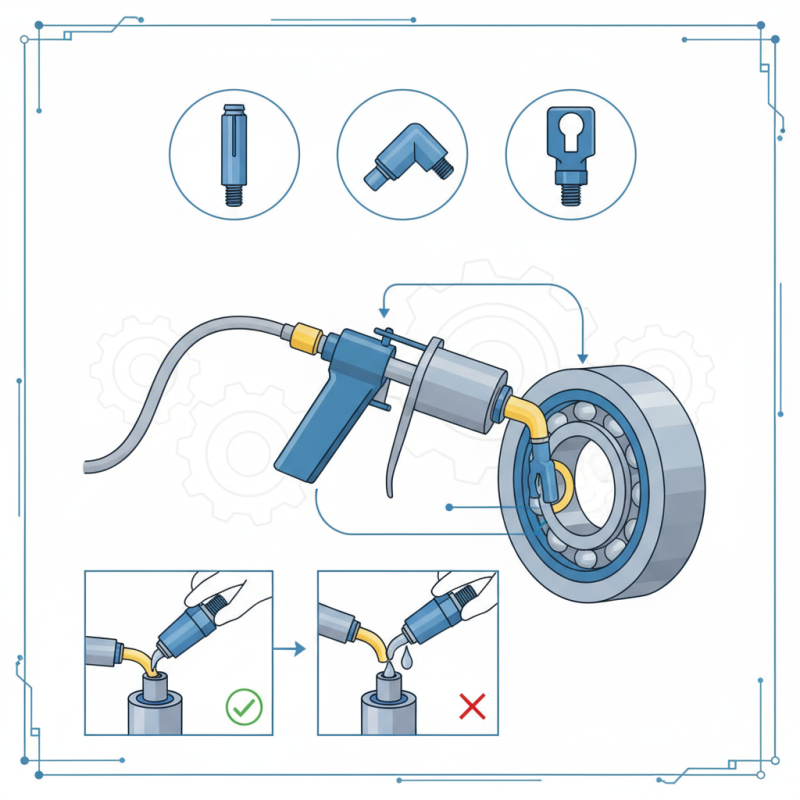
A grease coupler is a critical tool in lubrication systems. It connects a grease gun to grease fittings on machinery. This device makes it easier to apply grease where it's needed. The design typically features a fitting that grips the grease nipple securely.
Research shows that improper lubrication can lead to equipment failure. According to industry reports, nearly 60% of machinery failures are attributed to inadequate lubrication. A grease coupler can help prevent such issues. It enables precise grease application, minimizing waste. However, many users overlook its maintenance. A dirty coupler can lead to mixed greases, which might harm machinery.
Effective lubrication promotes equipment longevity. However, without proper training, operators can misuse grease couplers. For example, using an over-pressurized grease gun can damage fittings. Understanding the tool's mechanics is crucial. A little knowledge goes a long way in optimizing performance.
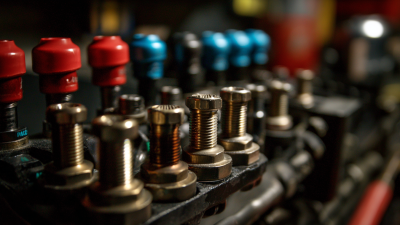
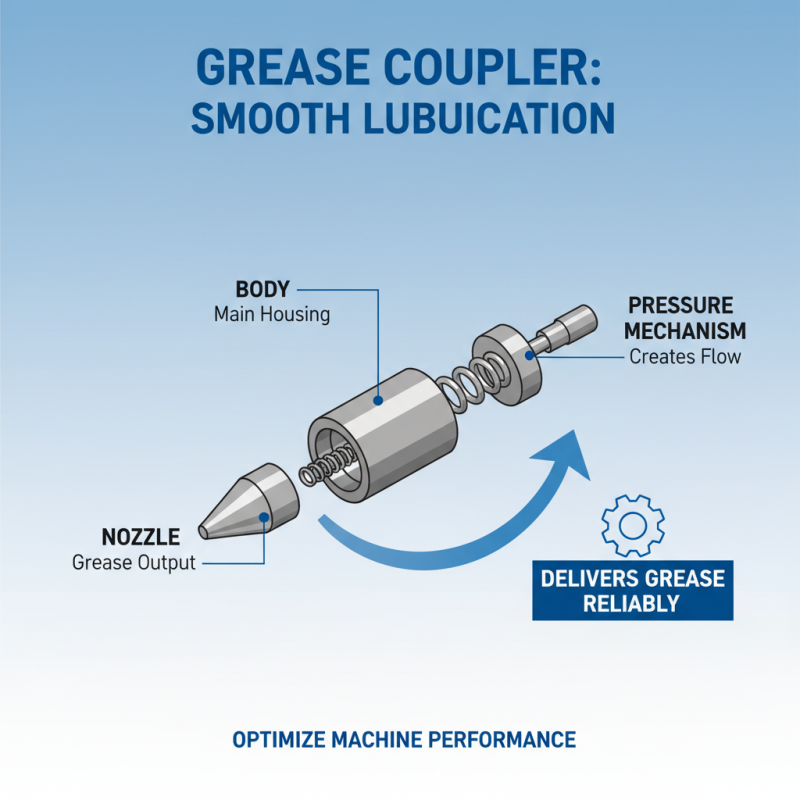
A grease coupler is a tool designed for smooth lubrication in various machines. Understanding its components helps in its effective use. A typical grease coupler consists of a body, a nozzle, and a mechanism to create pressure. These parts work together to deliver grease reliably.
The body is usually robust, made from durable materials. It ensures longevity and resistance to wear. The nozzle is typically flexible, allowing easy access to hard-to-reach areas. The pressure mechanism is crucial; it helps force the grease out when engaged.
Tips: Always inspect the coupler for damage before use. A worn coupler can lead to leaks and inefficiency. Clean the nozzle regularly to avoid blockages. Regular maintenance ensures that you always have proper lubrication. Understanding these components leads to better performance and reduced downtime in machinery.
A grease coupler is a vital tool in maintenance and machinery lubrication. It connects a grease gun to a grease fitting, allowing for efficient application of grease. Typically made of metal or durable plastic, the coupler features a spring-loaded mechanism. This mechanism ensures a secure connection to the grease fitting, preventing leaks during the operation.
How does a grease coupler function? When the grease gun is activated, it generates pressure. This pressure forces grease through the coupler and into the fitting. Studies show that using a good coupler can reduce waste by up to 30%. However, improper usage can lead to clogs. Many operators overlook the importance of cleaning the coupler after each use. A dirty coupler can introduce contaminants into the system, compromising machinery performance.
Furthermore, the design of grease couplers varies widely. Some are equipped with automatic locking features, while others rely on manual locking. The choice of coupler can significantly impact ease of use and efficiency. Data suggests that the right coupler can enhance lubrication effectiveness, yet many users still opt for cheaper options without assessing their long-term performance. This can lead to increased maintenance costs and equipment failures over time.
A grease coupler is a simple yet efficient tool for lubrication. It connects a grease gun to grease fittings. Its design enhances grease flow, making maintenance easier. Companies report that using a grease coupler can reduce time spent on machinery care by up to 30%. This efficiency proves invaluable in high-demand environments.
Using a grease coupler reduces spills and mess. It allows for precise application, ensuring grease goes where it is needed. According to industry studies, improper lubrication can lead to 50% faster wear on equipment. The coupler's ability to decrease this risk is significant, saving companies money in repairs and replacements.
Moreover, the ergonomic design of many grease couplers can reduce user fatigue. Workers often struggle with traditional greasing methods. A grease coupler simplifies the task, promoting safety and productivity. Not all couplers are made equal, and some may deliver subpar performance. Regular reviews can help ensure the best choices are consistently made to protect machinery.
Grease couplers play a crucial role in various applications, particularly in industries involving heavy machinery and vehicles. They are essential for efficient lubrication processes in equipment like excavators, trucks, and industrial machinery. The global grease coupler market has seen substantial growth, projected to reach $1.2 billion by 2025, as reported by industry insights. This increase highlights their significance in maintenance practices, where they help ensure longevity and efficiency of equipment.
In agricultural settings, grease couplers are invaluable. They simplify the lubrication of farm equipment, which operates under harsh conditions. Regular maintenance can reduce breakdowns by 25%, according to machinery reports. However, many users neglect the couplers, leading to insufficient lubrication. This oversight can affect equipment lifespan and performance, resulting in costly repairs. With a well-maintained grease coupler, operators can save time and resources in the long run.
The automotive industry also benefits from grease couplers. They are integral in servicing vehicles, ensuring joints and bearings receive adequate lubrication. Some reports indicate that proper lubrication can increase the life of components by up to 40%. Still, many mechanics overlook this when servicing cars. This highlights a disconnect in preventive maintenance practices. Failure to integrate grease couplers effectively can impede operational efficiency and safety.
| Application Area | Description | Advantages | Common Types |
|---|---|---|---|
| Automotive | Used for lubrication of wheel bearings and other components. | Easy access for maintenance, reduces wear. | Standard, Heavy-Duty |
| Industrial Machinery | Provides grease to bearings and gears in machines. | Increases equipment life, improves efficiency. | Manual, Pneumatic |
| Construction Equipment | Lubricates moving parts in heavy machinery like excavators. | Durable and reliable under harsh conditions. | Grease Gun Couplers, Quick Connectors |
| Agriculture | Used for lubricating farm equipment for better performance. | Improves reliability, reduces downtime. | Standard, Lockable |
| Marine | Lubricates parts of boats and ships to prevent corrosion. | Resistant to water, protects against rust. | Grease Couplers for Marine Equipment |